
Southgate questions FIFA's handling of Ronaldo's World Cup ban, raises concerns over consistency
Background to the controversy
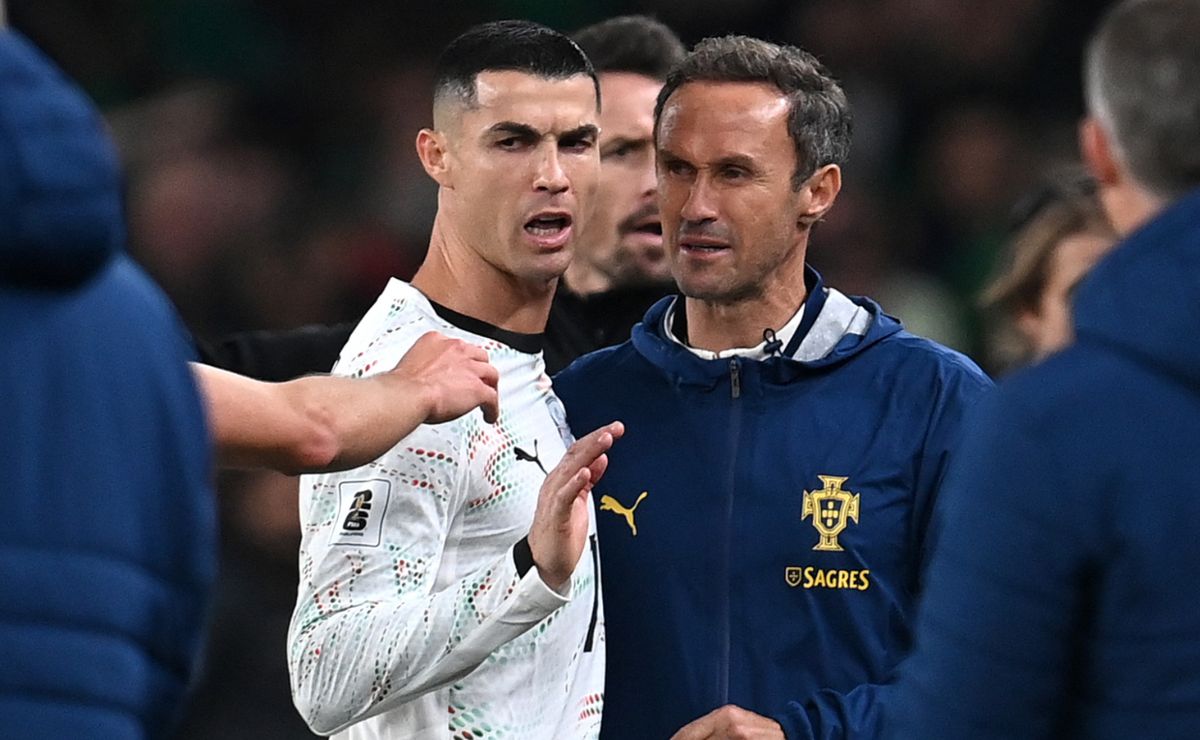
In November 2025, Portugal captain Cristiano Ronaldo was dismissed from a World Cup qualifying match against the Republic of Ireland after an elbow clash with defender Dara O’Shea. The referee issued a straight red card for violent conduct, triggering an automatic three‑match suspension under FIFA’s disciplinary code.
FIFA’s revised sanction
Following the incident, the FIFA Disciplinary Committee convened and altered the original punishment. Ronaldo served the first match of the ban, but the remaining two games were placed on a one‑year probationary period, meaning they would only be enforced if he committed a further offence within that timeframe. This adjustment cleared him to feature in Portugal’s opening fixtures at the 2026 World Cup, extending his already historic international career.
Southgate’s intervention
Former England manager Gareth Southgate addressed the issue on the talk show The Amol Rajan Connection. He argued that disciplinary matters should be confined to the referee’s decision and the independent panels established to review them, without additional influence from broader governing bodies. Southgate highlighted the timing of Ronaldo’s reduced sanction – noting that the Portuguese star had recently appeared at a high‑profile event that seemed linked to FIFA – and questioned whether a less celebrated player would have received the same leniency.
Key points raised by Southgate
- Disciplinary decisions must remain within the existing framework of referees and independent review panels.
- The proximity of Ronaldo’s appearance at a FIFA‑associated event to the decision raised concerns about possible external pressure.
- Consistency is vital; the same standards should apply regardless of a player’s global stature.
- Preferential treatment, if perceived, could erode confidence in the sport’s governance.
FIFA’s regulatory basis
Article 27 of FIFA’s Disciplinary Code permits the suspension of part of a sanction, either in whole or in part, provided a probationary period is attached. This mechanism is designed to offer flexibility while still upholding the integrity of the rules. In Ronaldo’s case, the committee cited his extensive disciplinary record – more than 200 international appearances without a comparable incident – as a factor influencing the decision to defer two matches of the original ban.
Debate over fairness
The episode has reignited a broader discussion about how the sport’s governing bodies balance discretion with uniformity. Critics argue that allowing a star player to avoid a full suspension sets a precedent that could be exploited in future cases. Supporters of FIFA’s approach contend that the code explicitly allows for conditional suspensions, and that each case is evaluated on its own merits.
What the fans need to know
For supporters of Portugal and the global football community, the practical outcome is clear: Ronaldo will be eligible for selection in the early stages of the 2026 World Cup. However, the surrounding controversy serves as a reminder that the perception of fairness is as important as the letter of the law. As the tournament approaches, the scrutiny on FIFA’s disciplinary processes is likely to intensify, especially if similar high‑profile incidents arise.
Looking ahead
Both FIFA and national associations will be watching closely how the probationary clause is applied over the next year. Any further misconduct by Ronaldo could reactivate the suspended matches, effectively reinstating the original three‑game ban. Meanwhile, Southgate’s comments have added pressure on the governing body to demonstrate transparent and consistent enforcement of its regulations, ensuring that no player – regardless of fame – is seen as above the rules.
Post a Comment